

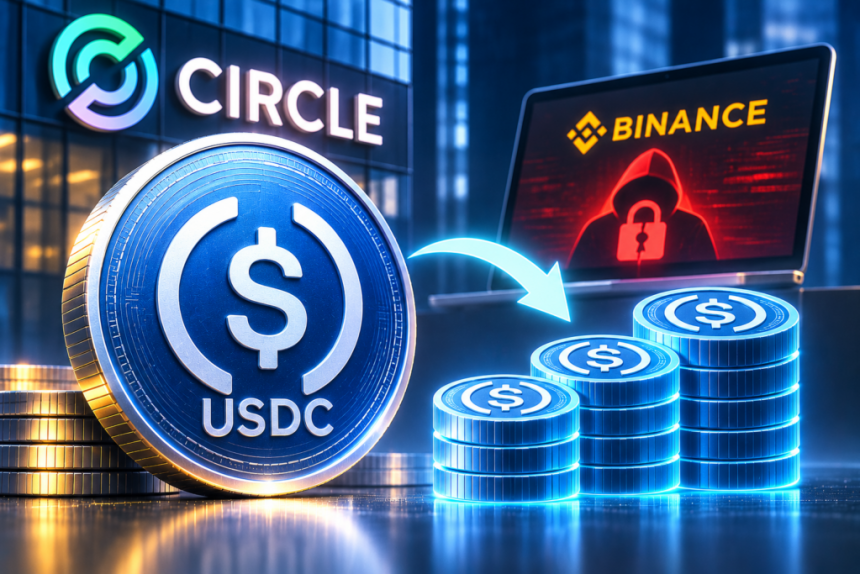
The US government has found an unusual way to pursue billions stolen in the Binance hack. The Department of Justice wants $1.17 billion in frozen USDC across 18 blockchains.
Circle cannot move the original tokens, but it has agreed to issue an equivalent amount if a court orders their forfeiture.
Key Takeaways
- The DOJ is seeking $1.17 billion in USDC across 36 addresses on 18 blockchains.
- Circle has already blocked access to the original tokens.
- The company could issue equivalent USDC following a final forfeiture order.
RECOMMENDED: Strategy Spends $228M on Stock, Just $33M on Bitcoin. Why?
How $1.17 Billion in USDC Ended Up in the DOJ’s Crosshairs
On November 23, the DOJ filed a civil forfeiture complaint targeting USDC linked to the October 29 Binance hack. The complaint covers 36 addresses across 18 blockchains. Its listed balances total approximately $1.17 billion.
US investigators attribute the wider theft to North Korea’s Lazarus Group/APT38, based on technical evidence and the movement of stolen funds. The full Binance attack involved approximately $6 billion in cryptocurrency.
The DOJ’s action covers only the USDC identified in these addresses, not the entire amount stolen.
Why Circle Could Have to Issue $1.17 Billion in New USDC
Circle has already blocked the original tokens, preventing transfers from the targeted addresses. However, the company told prosecutors it cannot move those tokens to government-controlled wallets.
Instead, Circle has agreed to voluntarily issue an equivalent amount of new USDC. It would transfer these tokens to the US government once the court grants a final forfeiture order.
This means the original tokens would remain inaccessible while the government receives newly issued USDC. The arrangement is conditional. No replacement tokens have been transferred yet.
ALSO READ: Bitcoin Breaks 200-Week Support. Is Another 17% Drop Coming?
What This Means for Crypto’s Decentralization Debate
The case exposes an important distinction between blockchain technology and the assets running on it. USDC operates on public blockchains, but Circle retains the ability to freeze addresses and restrict transfers.
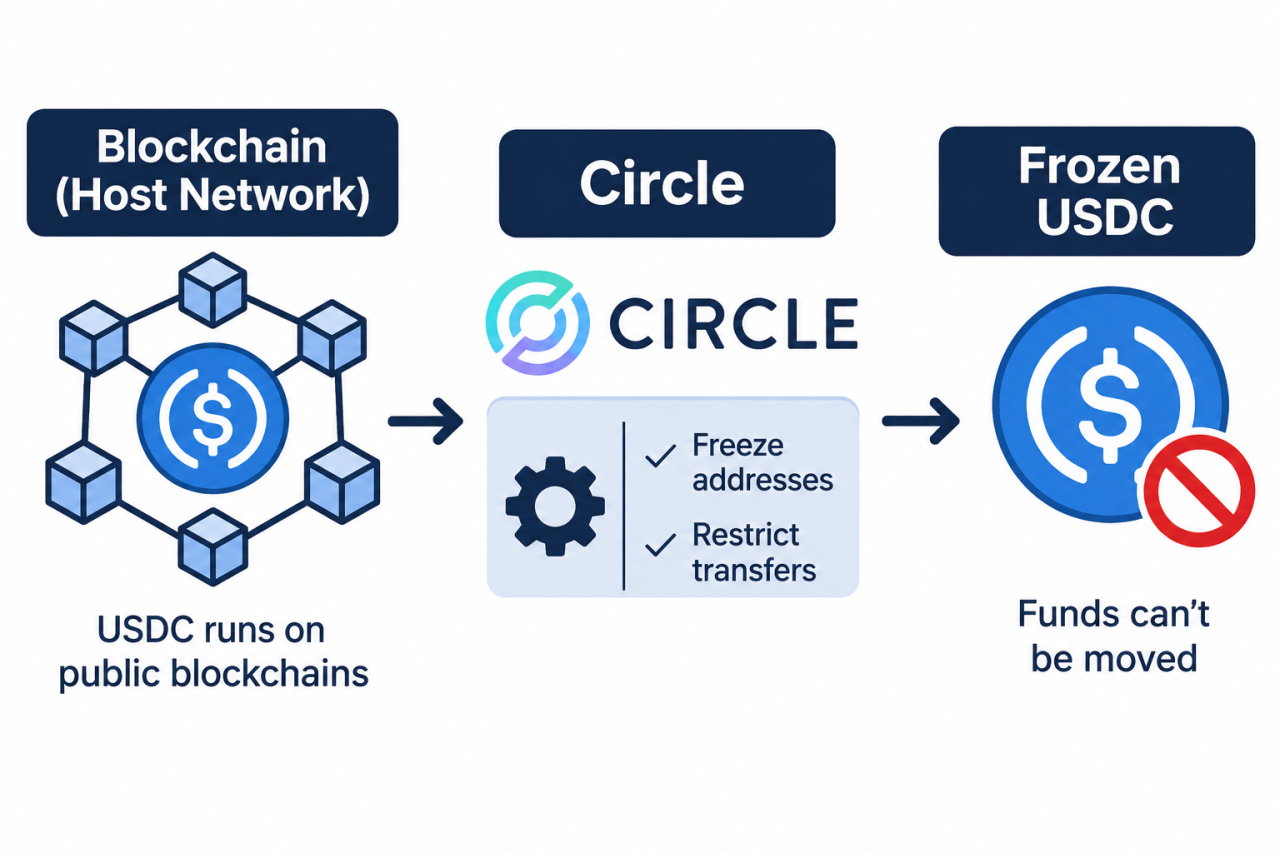
This gives authorities a way to pursue stolen stablecoins without accessing the criminals’ private keys. However, it also means USDC holders depend on the issuer’s control mechanisms.
The DOJ says US authorities have helped freeze, seize or return more than $2.9 billion in crypto since the Binance theft.
Conclusion
Circle’s proposed replacement tokens show how stablecoin issuers can help authorities recover stolen funds. But they also raise questions about control over assets that operate on supposedly open financial networks.
For investors, understanding these controls is becoming increasingly important when evaluating stablecoins, exchanges and blockchain projects. InvestingHaven’s premium blockchain research service explores the developments shaping crypto’s investment, including the regulatory and structural risks behind digital assets.
For now, we wait to see whether the court approves the forfeiture and Circle follows through with the replacement issuance.