


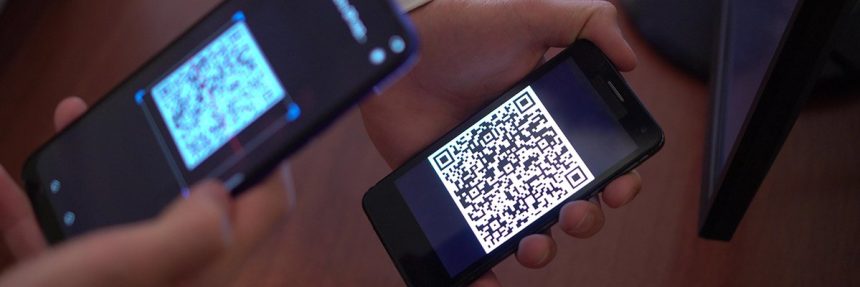
In July 2025, more than 60 healthcare organizations signed a CMS pledge to enable patients to more easily access and share health data with providers. The idea is to reduce repetition, as patients typically have to enter the same data on a clipboard at every medical visit. Instead, the agency wants to enable patients to retrieve their health records from CMS Aligned Networks or personal health record apps and use QR codes or Smart Health Cards to share their data with providers.
The pledge reads: “We commit to seamless, secure data exchange — eliminating the need for patients to repeatedly recall and write out their medical history. We are committed to ‘kill the clipboard,’ one encounter at a time.”
Several companies have formed health data partnerships to honor the pledge. In February, athenahealth and b.well Connected Health announced a point-of-care workflow that enables patients to share health data without multiple portal logins, paperwork and faxes.
Meanwhile, b.well demoed its FHIR-native platform with Samsung Health at HIMSS in March. In the Samsung Health app on Galaxy phones, users can access a complete health history. Apple is also an early adopter of the pledge, and users can share health records with other apps on iPhones.
The “Kill the Clipboard” pledge is part of the CMS Health Tech Ecosystem, an initiative in which the agency is calling for the healthcare industry — including EHR vendors, health app developers, providers and innovators — to voluntarily participate in a shared framework for data and access that replaces fragmented systems with patient-facing apps
One of the goals of the pledge is seamless digital check-in, CMS stated in a news release last summer. This month, at a CMS HealthTech Ecosystem Live First Wave Launch event, the agency introduced various digital check-in tools to enable sharing via QR code scans on phones.
Despite efforts to participate in the pledge, early adopters face challenges in enabling data sharing.
Challenges for early adopters in building, syncing systems
Deven McGraw, the chief regulatory and privacy officer for Citizen Health, a patient-centered AI advocacy platform, noted how new workflows will require health systems, data networks and EHR vendors to collaborate. New infrastructure will also require time and investment to enable providers and other healthcare organizations to work together and share data.
In healthcare, plans for new tech tools often get delayed for months or years in the design phase as stakeholders work on reaching consensus on policies and technical approaches.
But with pledgees being asked to “roll up their sleeves and build something,” McGraw is “cautiously optimistic” about the pace of infrastructure development speeding up.
“The approach is more akin to how tech companies operate — spend some time in the planning phase, but get more quickly to the stage of trying, testing and working out the kinks as you build,” she said.
Patients have expressed frustration with providing medical histories or changes to their medical history on clipboards, and they are often unprepared to provide the information on the spot, McGraw said. However, getting providers to sync up to standardize patient forms will be a challenge because the information that providers believe they need to provide quality care might differ between providers or practices.
“What’s also challenging is that the pledge proposes the use of [QR] codes or SMART Health Cards/Links, both by the patient (presumably using an app) and the medical facility, neither of which are currently integrated into the health system,” McGraw said.
Smart Health Links is an open standard that allows patients to share a digital health record by scanning a QR code or accessing a secure link. QR codes are two-dimensional codes that patients can scan on their phone to connect to a site address, such as a personal health portal.
Clinicians may also encounter workflow challenges, such as educating patients on QR codes and ensuring that front desk staff consistently ask patients to upload their demographic and medical histories by scanning QR codes with their phones. Healthcare providers will also need to incorporate QR code display devices at the front desk and add places in the EHR to store the demographic and medical information the patient provides, according to McGraw.
Organizations, like digital health and wellness company Sharecare, are working on supporting QR-based workflows so providers can incorporate patient-authorized information into their existing clinical systems, said Shelly Davenport, Sharecare’s executive vice president of strategy. The information includes both structured data and human-readable summaries, which are summaries offering personalized health insights, biometrics and lab results in an easily digestible format for patients.
But a diverse and evolving ecosystem leads to variation in how providers support data ingestion and display patient-shared information, according to Davenport. Organizations must ensure consistency and align on how they work with human-readable summaries.
Historically, providers have controlled healthcare workflows that include portals and manual intake processes, Davenport noted. But now providers aim to make access to healthcare data more patient-friendly.
“Our focus is on delivering a seamless experience that reduces the need for patients to repeatedly provide the same information, while fitting naturally into provider workflows,” Davenport said.
However, healthcare providers and EHR vendors have concerns around digital data security and privacy, including the mechanisms required to validate that patients are using health apps to collect at least a portion of their medical records, McGraw said. She added that providers need to validate that patients are using health apps to ensure they are accessing their complete medical record, which enables providers to then receive relevant and accurate health information from patients.
In addition to verifying that patient information is accurate, implementing identity verification is important for balancing security and usability, Davenport said.
“Identity verification and security requirements must be implemented in a way that maintains trust while remaining simple and accessible for patients,” she added.
She also noted that patient adoption of health apps drops if they are too complicated or burdensome.
One way to ensure patient trust is to partner with identify verification platforms that have mechanisms in place. For example, Sharecare is working with credentialed identity platforms CLEAR and ID.me on AskMD, the health navigation and decision support platform it built to make the pledge operational, Davenport said.
“[AskMD] enables patients to verify their identity, access their health information and share it directly with providers at the point of care, reducing the need for repetitive intake and manual data entry,” Davenport said.
Gauging the success of the ‘Kill the Clipboard’ pledge
The pledge will be successful when healthcare organizations eliminate repetition during patients’ digital intake processes, according to Davenport.
“At a foundational level, success is measured by reducing the need for patients to manually re-enter their medical history during care encounters,” she said.
But “ongoing collaboration across the ecosystem is also essential to ensure consistency and scalability over time,” Davenport added. “We need all of these apps, networks, EHRs, and providers who pledged to work together to demonstrate how it could be done to make this a reality.”
Success also means decreased reliance on redundant paper forms and increased patient-initiated data sharing at the point of care, she said.
Honoring the pledge means incorporating patient-shared data successfully into provider workflows while allowing patients to be an active participant in accessing and sharing their data, Davenport added.
McGraw said “Kill the Clipboard” has already been shown to be workable through b.well’s demo and with upcoming pledge deadlines for organizations.
“With deadlines coming up for entities and organizations to meet their pledges, we expect some more will be able to show concretely how this [type of data sharing] can actually be done, without the need to spend months or years contemplating policies and technical approaches,” McGraw said. “The hope is that we can move more quickly to improving and scaling these early efforts through more and more ‘pledgees’ putting this into practice and introducing it into their organizations.”
Brian T. Horowitz started covering health IT news in 2010 and the tech beat overall in 1996.